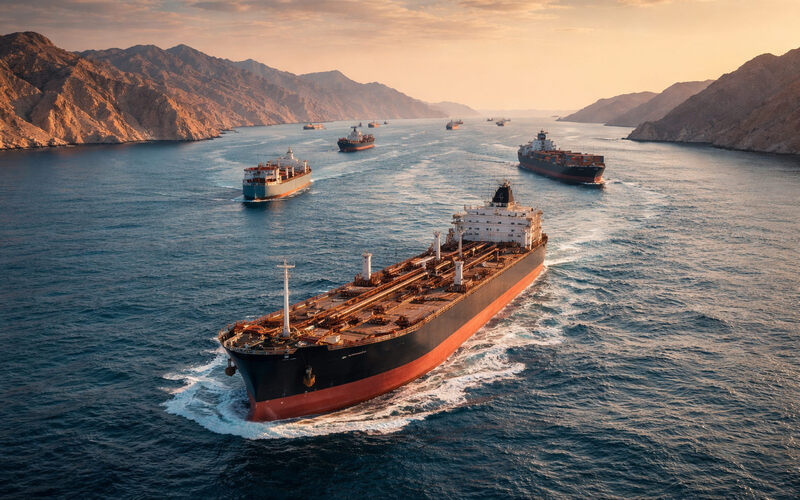
It is strange how much of our world relies on the quiet, unremarked flow of things. We rarely think about the massive, heavy ships moving through the Strait of Hormuz, or the sheer scale of the commerce that depends on a single, narrow stretch of water being left unobstructed. But when a blockade is threatened, the tension is almost palpable. It isn't just about the ships; it is about the sudden, sharp awareness of how easily a vital artery can be pinched shut.
We see the news, and we see the maps with those red lines or the warnings of restricted passage. It feels distant, perhaps. But there is a certain way that kind of restriction settles into the mind. It's a heavy, tightening sensation.
Actually, looking at it again, it isn't just about the sea lanes. We do this to ourselves, don't we? We build these mental blockades, these little strategic enclosures of thought. We decide certain ideas are too risky to let through, or we wall off parts of our hearts to keep them safe from the "traffic" of others. We create these narrow, guarded channels where only the safest, most familiar thoughts are allowed to pass.
It is a way of seeking control, I suppose. A way of managing the perceived threat of the unknown. But as we watch the maps of the world tighten, we might notice that a life lived entirely within a blockade is a life that is slowly being starved of its very necessity. Without the flow, there is only stagnation.
There is a certain truth in the way Scripture speaks of paths and ways, not as mere routes, but as the very lifeblood of existence. We are meant to move, to encounter, to be part of a larger, much more complex circulation. When we block the way, even for our own protection, we might be closing ourselves off from the very sustenance we need.
Perhaps the real danger isn't the disruption from the outside, but the quiet, self-imposed closures we mistake for safety. It is a difficult thing to keep the channels open when the world feels so much more volatile.